

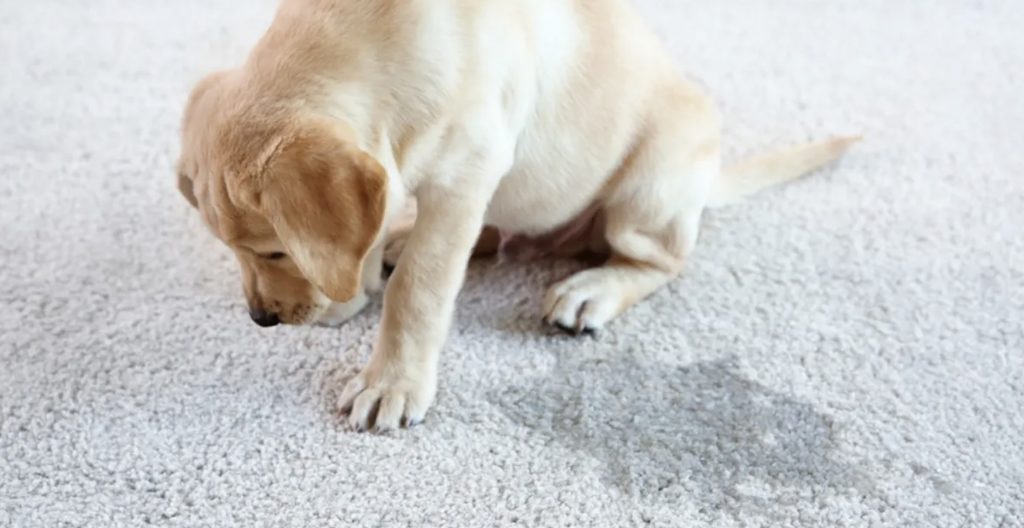
A pet accident does not make your home dirty, and it does not automatically mean the carpet must be replaced. What matters is how quickly the area was treated, how much liquid reached the lower layers, and whether the accident happened once or repeatedly in the same place.
| Quick answerSometimes completely, often significantly, but not always. Fresh, localized urine limited to the carpet pile or backing has the best chance of full removal. Repeated or aged contamination can reach the underpad or subfloor, and urine can permanently alter dyes, fibres, or the bond between carpet layers. No responsible company should guarantee a 100% result before inspection. |
If the smell disappears and then returns when the room feels humid, start with a pet stain and odour assessment rather than booking ordinary carpet cleaning and hoping for the best.
Pet urine removal in Toronto: facts at a glance
| Question | Practical answer |
| Can it be completely removed? | Sometimes. The result depends on age, repetition, depth, fibre, backing, and permanent colour or structural damage. |
| What must be removed? | The visible stain, the odour-causing source, and contamination in every affected layer. |
| When is the best chance? | A fresh, isolated accident treated before it penetrates the cushion. |
| Typical drying time | Many surface carpet-cleaning jobs dry in about 4-6 hours; subsurface treatment can take longer. |
| Published General Cleaning baseline | From CAD $39 for a small room up to 90 sq ft; CAD $0.39 per actual carpeted sq ft; CAD $149 minimum service. |
| Tax note | Published illustrations are before applicable Ontario HST of 13%, unless the booking checkout states otherwise. |
The most important distinction: the spot and the source are not the same thing
A yellow or brown mark is a visible symptom. The odour source may be wider than the mark and deeper than the carpet pile. A product can lighten the spot or add fragrance while leaving residue in the backing, cushion, or subfloor. That is why a carpet may look better immediately but smell again days later.
The Carpet and Rug Institute notes that urine chemistry varies with a pet’s diet, medications, age, health, sex, and reproductive cycle, and that some urine stains may not be removable. In other words, two accidents that look similar can respond differently.
Practical takeaway: judge success by the result after the area is fully dry, not by fragrance or appearance while the carpet is still damp.
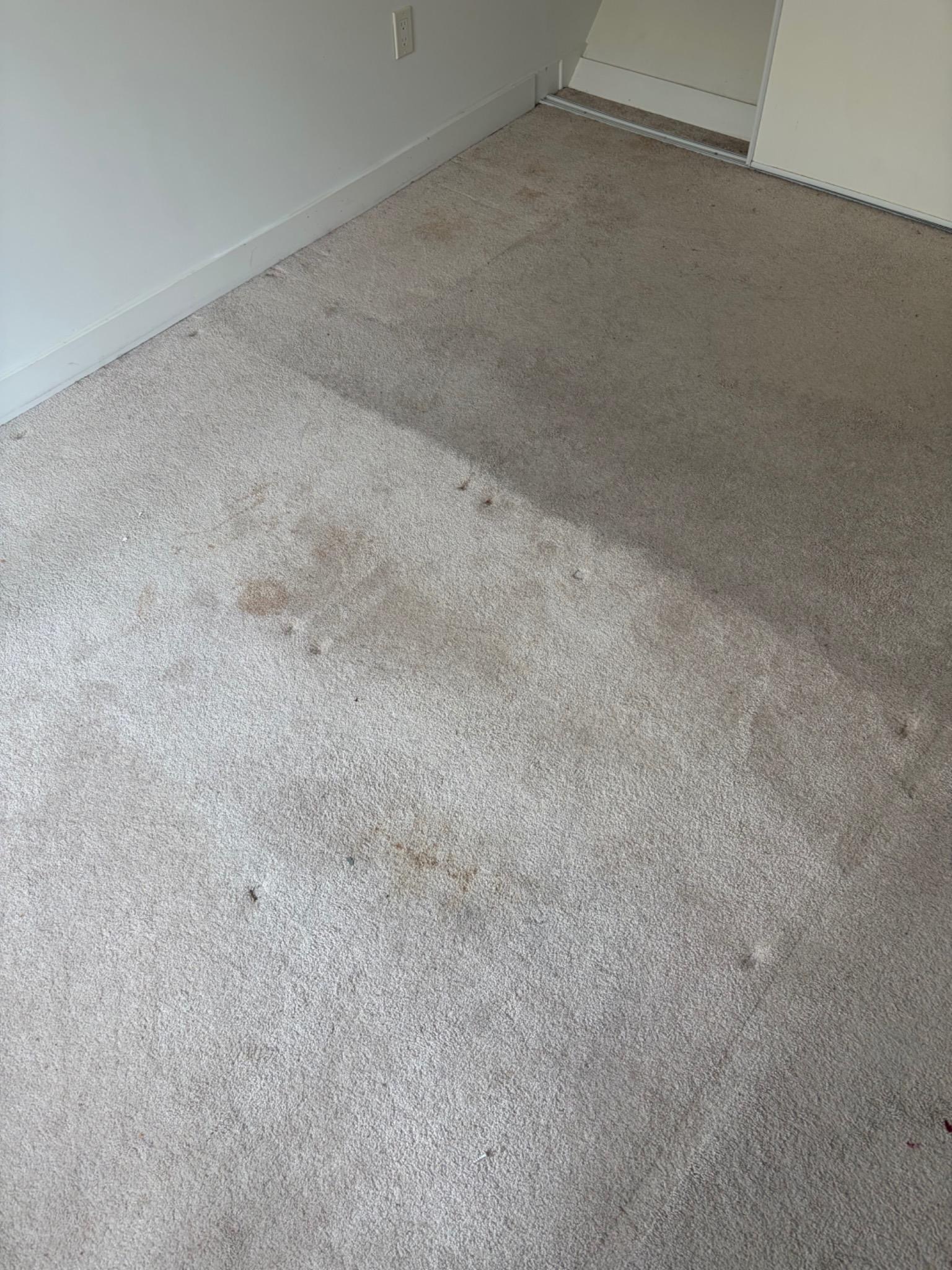
Leronzo Cleaning | Real carpet staining documented before professional cleaning.
Where pet urine can travel inside a carpet system
Wall-to-wall carpet is a layered system. A small fresh accident may remain near the surface; a larger or repeated accident can move through all four layers.
| Carpet-system layer | Why it matters |
| 1. Carpet pile | The visible fibres. Fresh liquid and visible discolouration appear here first. |
| 2. Primary + secondary backing | Holds the carpet construction together. Residue can spread beyond the visible edge, and repeated wetting can weaken the bond between layers. |
| 3. Cushion or pad | Absorbent material under the carpet. Repeated accidents can create a larger hidden reservoir. |
| 4. Subfloor | Wood or concrete below the cushion. Severe or long-term contamination may require work beyond carpet cleaning. |
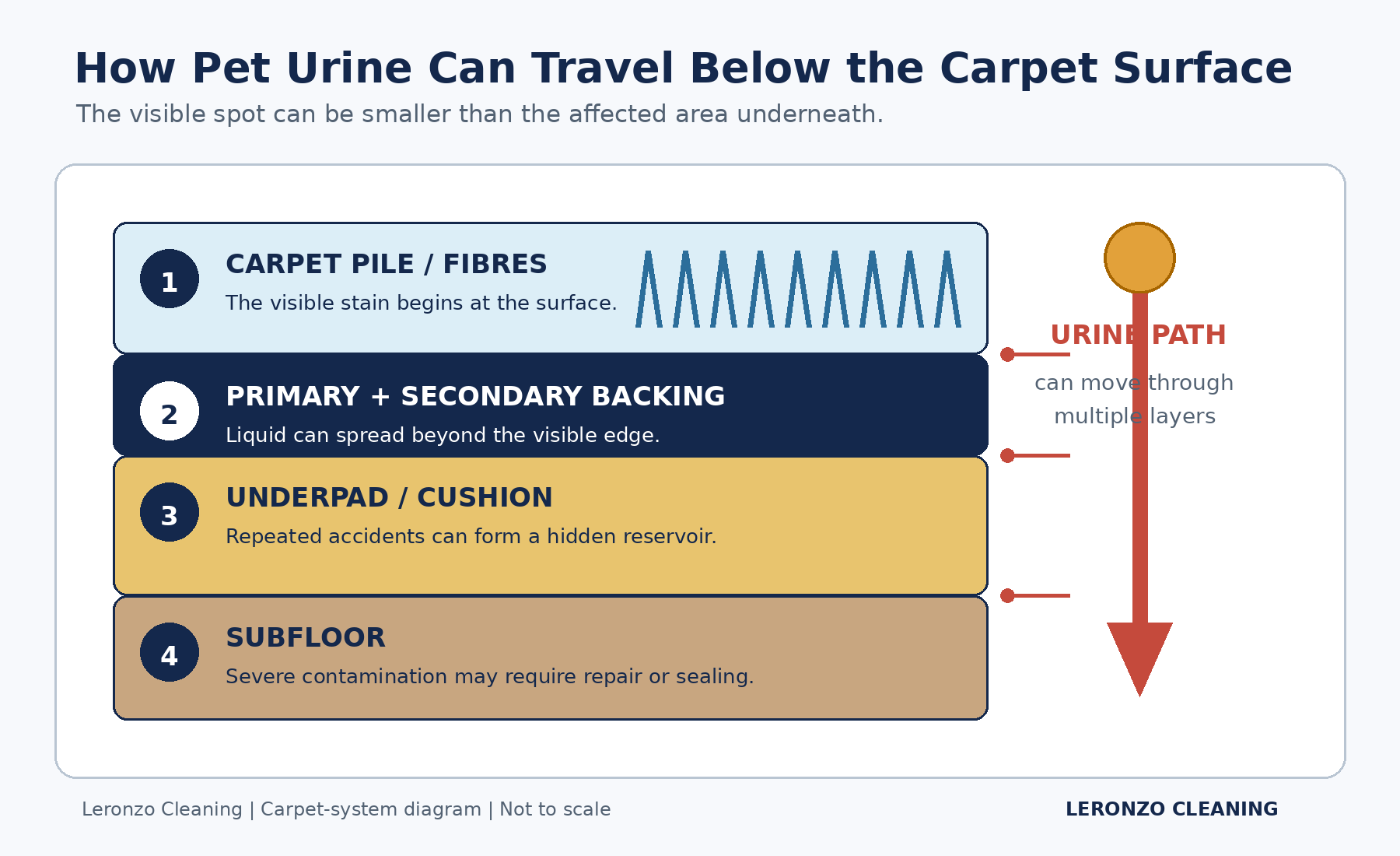
Leronzo Cleaning | How urine can move from carpet pile into backing, underpad, and subfloor.
If treatment reaches only layer one while contamination sits in layers three or four, the surface may improve but the source remains. This is the main reason ordinary spot cleaning and pet-specific deep treatment should not be treated as the same service.
Why pet urine odour can return after the carpet seemed clean
The visible area was treated, but residue remained in the backing or cushion.
The actual affected area was larger than the visible stain.
A deodorizer masked the smell temporarily without removing the source.
Too much DIY product was applied and not fully rinsed or extracted.
Moisture or seasonal humidity made remaining residue noticeable again.
The carpet fibre changed colour permanently even though much of the contamination was removed.
A stronger fragrance is not a stronger result. The most credible process is source-focused: identify the likely spread, choose a fibre-safe treatment, allow the required contact time, extract or rinse appropriately, control moisture, and reassess after drying.
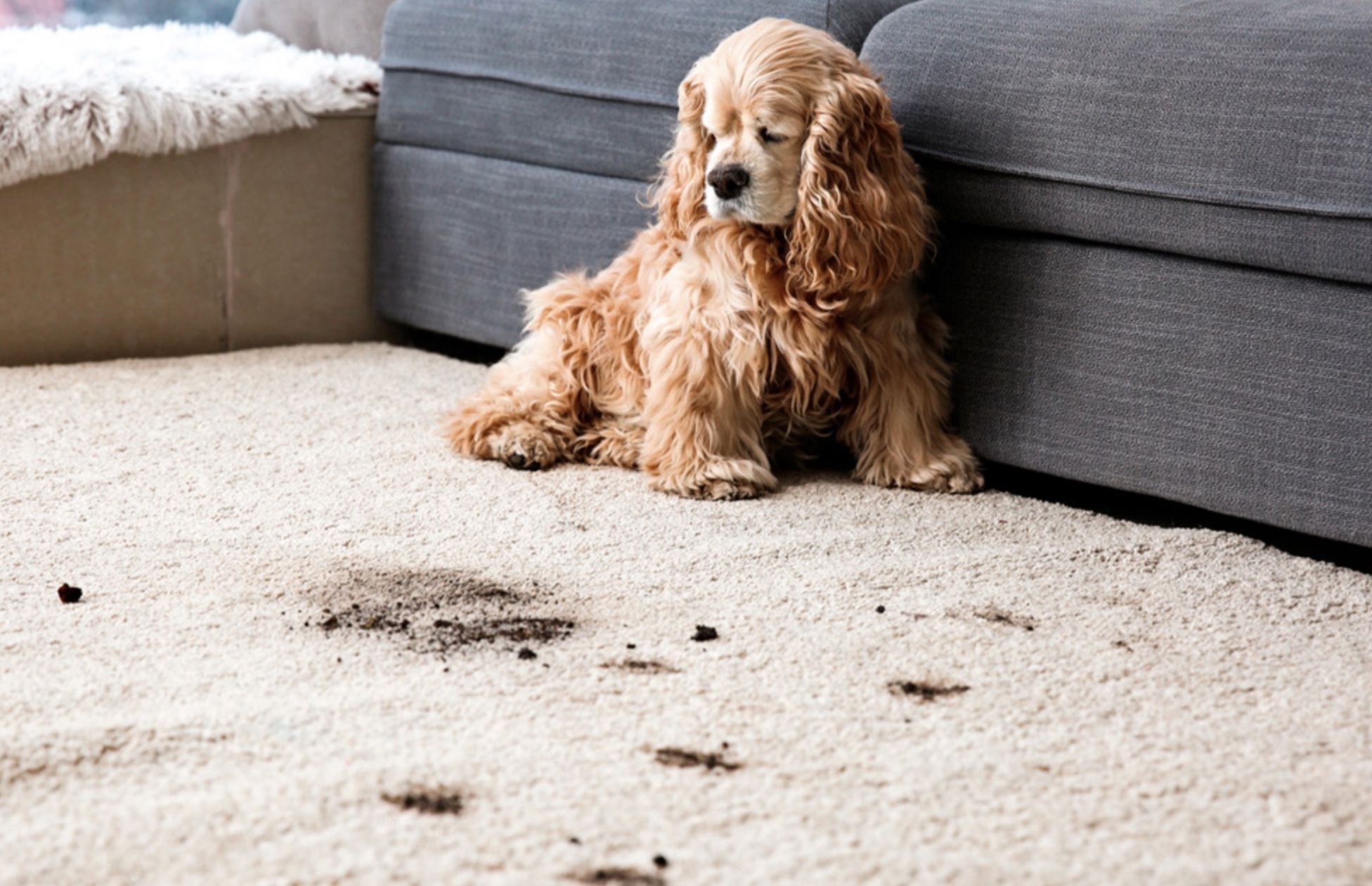
Leronzo Cleaning | Hidden carpet contamination needs a source-based assessment.
| Research check: masking is not the same as removalA 2020 controlled laboratory study placed cat urine on carpet and plywood-type subflooring, tested four marketed products, and compared odour on day 0 and day 15. Several products masked potent odours initially, but most did not remove the odour that emerged by day 15. This does not rank every product or predict every home; it supports a practical rule: evaluate the source after drying and time, not only the smell immediately after application. Read the peer-reviewed study. |
Fresh accident, old stain, or repeated marking: what changes?
| Situation | What is likely happening | Realistic next step |
| Fresh, small accident | More may still be removable before it spreads deeply. | Blot promptly, avoid heat, and arrange targeted treatment if odour remains. |
| Old, isolated stain | The fibre may be discoloured and dried residue may remain below the surface. | Assess stain and odour separately; substantial improvement is possible, but colour restoration is not guaranteed. |
| Repeated marking area | Contamination may be wider and deeper than the visible spots. | Deep treatment and a wider inspection zone are usually appropriate; padding may need evaluation. |
What to do immediately after a fresh accident
Blot; do not scrub. Use a clean white absorbent cloth or plain white paper towel and press from the outside toward the centre.
Remove as much liquid as possible. Change towels and repeat until very little transfers.
Avoid a household steam cleaner on the untreated urine spot. The Carpet and Rug Institute advises against heat for urine spots and recommends cool-water extraction for fresh spills.
Do not mix products. Bleach, ammonia, vinegar, peroxide, detergent, and enzyme products can react differently with fibres, dyes, and one another.
Keep the label or write down what you used. This helps the technician select the next treatment safely.
Arrange professional assessment if the area is large, the accident is old, the smell returns, or the same spot has been used repeatedly.
Important: first aid is intended to limit spread. It is not a substitute for deep treatment when liquid has reached the backing or cushion.
General Carpet Cleaning vs Deep Pet Urine Treatment at Leronzo
The cleanest way to prevent disappointment is to choose the service level by condition, not by the lowest headline price. Leronzo’s calculator separates maintained carpets from heavily used or contaminated carpets.
| Decision point | General Cleaning | Deep Cleaning / pet treatment |
| Best for | Normal use, light-to-moderate dirt, dust, and everyday surface marks. | Heavy dirt, deep stains, pet urine, strong odours, or long-term buildup. |
| Treatment intensity | Regular professional carpet refresh. | Extra pre-treatment, longer processing, and deep extraction or another method selected for the material. |
| Pet urine and strong odour | Not the right selection. | Included as a condition requiring targeted assessment and treatment. |
| Outside scope | Severe contamination and restoration. | Certified biohazard work, extreme contamination, and fabric or structural restoration. |
Use the Leronzo cleaning cost calculator to choose carpeted square footage or individual rooms and hallways. Select Deep when pet urine or strong odour is part of the condition so the booking reflects the work that may be required.
How professional pet urine treatment works
The exact method should change with the fibre, backing, age of the accident, affected area, and depth. A responsible workflow usually follows these stages:
1. Condition and fibre assessment. The technician reviews the carpet type, visible staining, odour pattern, previous products, and whether repeated accidents are likely.
2. Source mapping. The inspection area extends beyond the visible mark. UV tools may help locate possible residues, but IICRC guidance notes that previously treated areas may still fluoresce; fluorescence alone does not prove that urine remains.
3. Targeted pre-treatment. A material-appropriate treatment is applied to the affected zone. Leronzo’s published pet service may include enzyme-based urine neutralization.
4. Controlled contact time. The treatment needs enough time to work; rushing directly to extraction can reduce effectiveness.
5. Extraction or low-moisture rinse. The technician selects the method that can remove loosened residue while controlling moisture and protecting the carpet system.
6. Drying and final assessment. The area is checked again after treatment, and expectations are confirmed for any colour change, deeper-layer issue, or follow-up need.
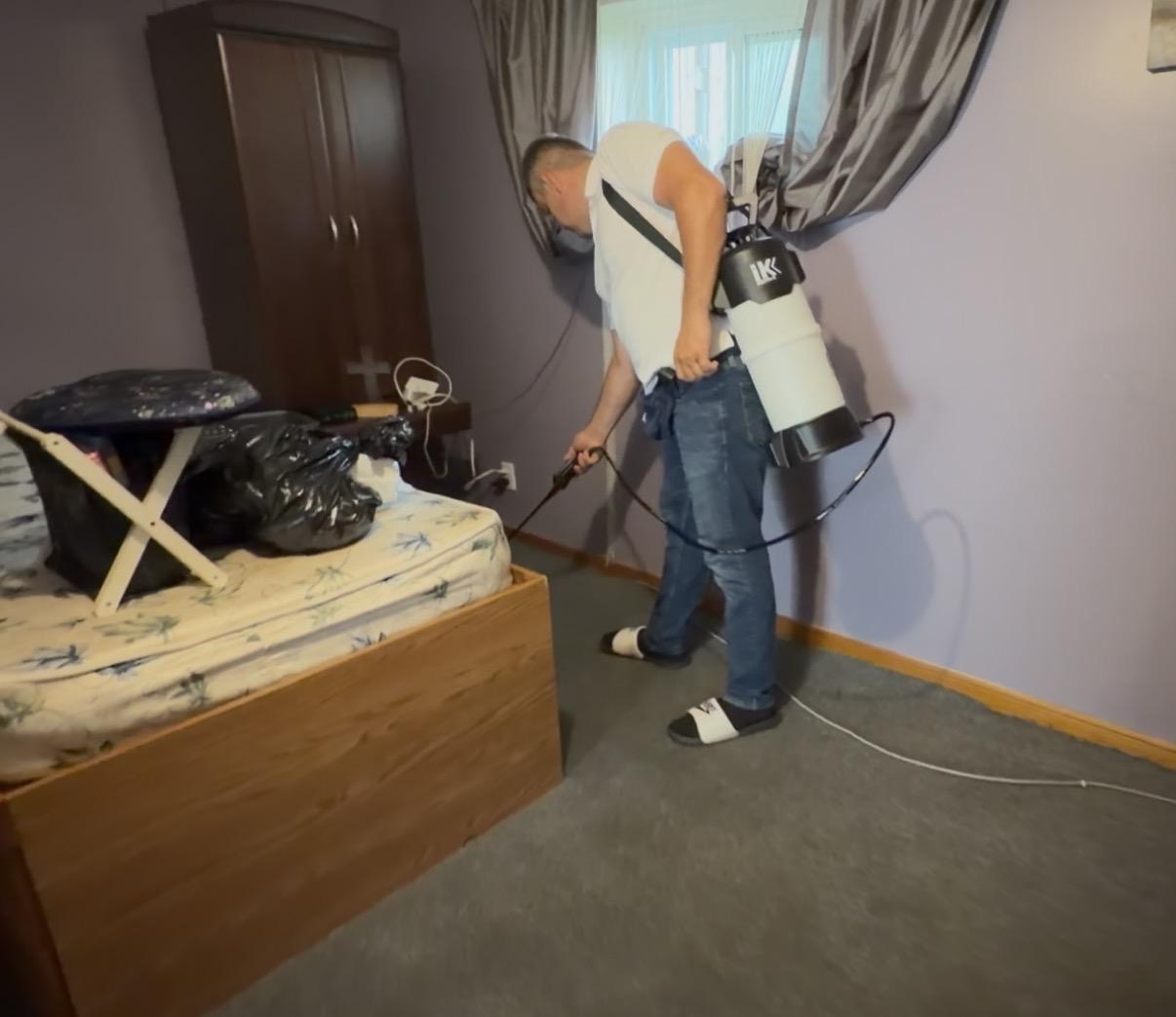
Leronzo Cleaning | Targeted pre-treatment during a real service visit.
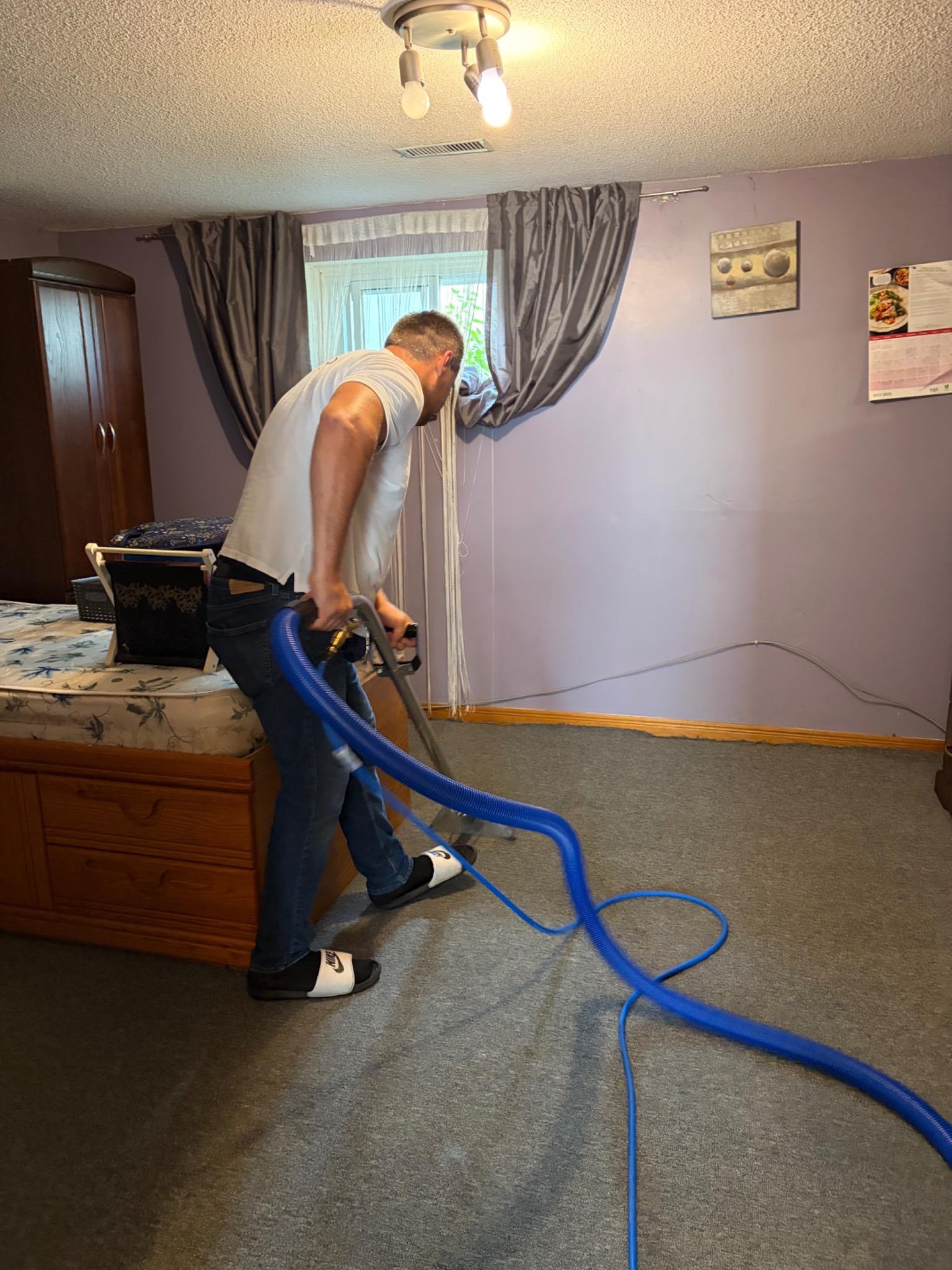
Leronzo Cleaning | Professional carpet extraction during a real service visit.
Equipment and chemistry: why one setting does not fit every carpet
Leronzo selects equipment by the size and condition of the job. The Esteam E600 is a commercial floor extractor with a 150 PSI diaphragm pump and 6-gallon solution and recovery tanks. The compact heated Mytee 8070 Lite operates at 120 PSI and is useful for controlled spot, detail, and upholstery work. More pressure or more heat is not automatically better; fibre type, colourfastness, backing condition, and contamination depth determine the safe method.
The same rule applies to chemistry. Enzyme pre-sprays such as Esteam ATTACK and products from the Prochem line can be part of a urine-treatment process, but labels, pH, fibre compatibility, pretesting, contact time, rinsing, and recovery still matter. Leronzo does not use one chemical formula for every carpet.
Can the stain disappear while the odour remains—or the reverse?
Yes. Stain removal and odour-source removal are related but separate outcomes.
| What you notice after drying | What it may mean |
| No visible stain and no odour | The treatment likely reached the affected material, but monitor the area through a normal humidity cycle. |
| Faint colour remains, no odour | Contamination may be removed while the fibre or dye has been permanently altered. |
| Carpet looks clean, odour returns | A deeper or wider source may remain in backing, cushion, or subfloor. |
| Odour improves but does not disappear | The affected area may be larger, repeated, or beyond cleaning-only scope; reassessment is appropriate. |
When carpet cleaning may not be enough
The cushion is extensively saturated or deteriorated.
The subfloor holds odour and needs sealing, repair, or replacement by the appropriate trade.
Urine has permanently changed the carpet dye or weakened the fibre.
There is mould, hazardous waste, or extreme biological contamination requiring a qualified remediation provider.
The carpet or upholstery needs repair or restoration rather than cleaning.
This is not a reason to assume replacement is necessary. It is a reason to diagnose the depth before paying for repeated surface treatments. Leronzo’s published Deep Cleaning scope excludes certified biohazard work, extreme contamination, structural repairs, and material restoration.
What affects the cost of pet urine removal in Toronto?
A fair quote should reflect the carpeted area and the contamination, not just the number of bedrooms. The main price factors are:
carpeted square footage or the number and size of rooms, hallways, and stairs;
one isolated accident versus several repeated marking zones;
fresh surface contamination versus penetration into backing or cushion;
carpet fibre, construction, colourfastness, and access;
previous DIY products and the amount of residue already present;
whether furniture must be moved and whether condo parking or elevator coordination is required;
whether the work is carpet-only or combined with upholstery, mattress, or area-rug treatment.
| Published Leronzo price context – not a pet-treatment quoteLeronzo’s August 9, 2026 carpet-cost guide lists General Carpet Cleaning from CAD $39 for a small room up to 90 sq ft, CAD $0.39 per actual carpeted sq ft, and a CAD $149 minimum service. At the square-foot baseline, 500 carpeted sq ft equals CAD $195 before cleaning level, stairs, furniture, pet treatment, parking, or other job-specific items. Pet urine work is priced after the affected area and condition are selected because one surface spot is not the same scope as repeated contamination through three or four layers. Figures are in Canadian dollars and before applicable Ontario HST of 13%, unless checkout states otherwise. |
For standard room and square-foot pricing, see How Much Does Carpet Cleaning Cost in Toronto? 2026 Prices by Room and Square Foot. Pet urine and strong-odour treatment should be selected as Deep Cleaning and confirmed against the actual condition.
A two-minute photo checklist for a more accurate estimate
You do not need to write a long explanation. Send or prepare these details:
one wide photo showing the whole room and the location of the affected area;
one close photo of each visible spot, taken in natural light if possible;
the approximate carpeted area or room size;
whether the accident is fresh, old, or repeated;
whether the odour is constant or stronger when the room is humid;
the names of any products already applied;
your building type, parking situation, and service location in Toronto or the GTA.
Why this helps: accurate information reduces the chance of choosing General when the job needs Deep, and it lets the team arrive with the right time, treatment plan, and equipment.
What real before-and-after photos can—and cannot—prove
Before-and-after images are useful evidence of workmanship and visible improvement, but they cannot prove odour removal. Odour must be assessed after drying, and a photograph cannot show what remains in the cushion or subfloor.
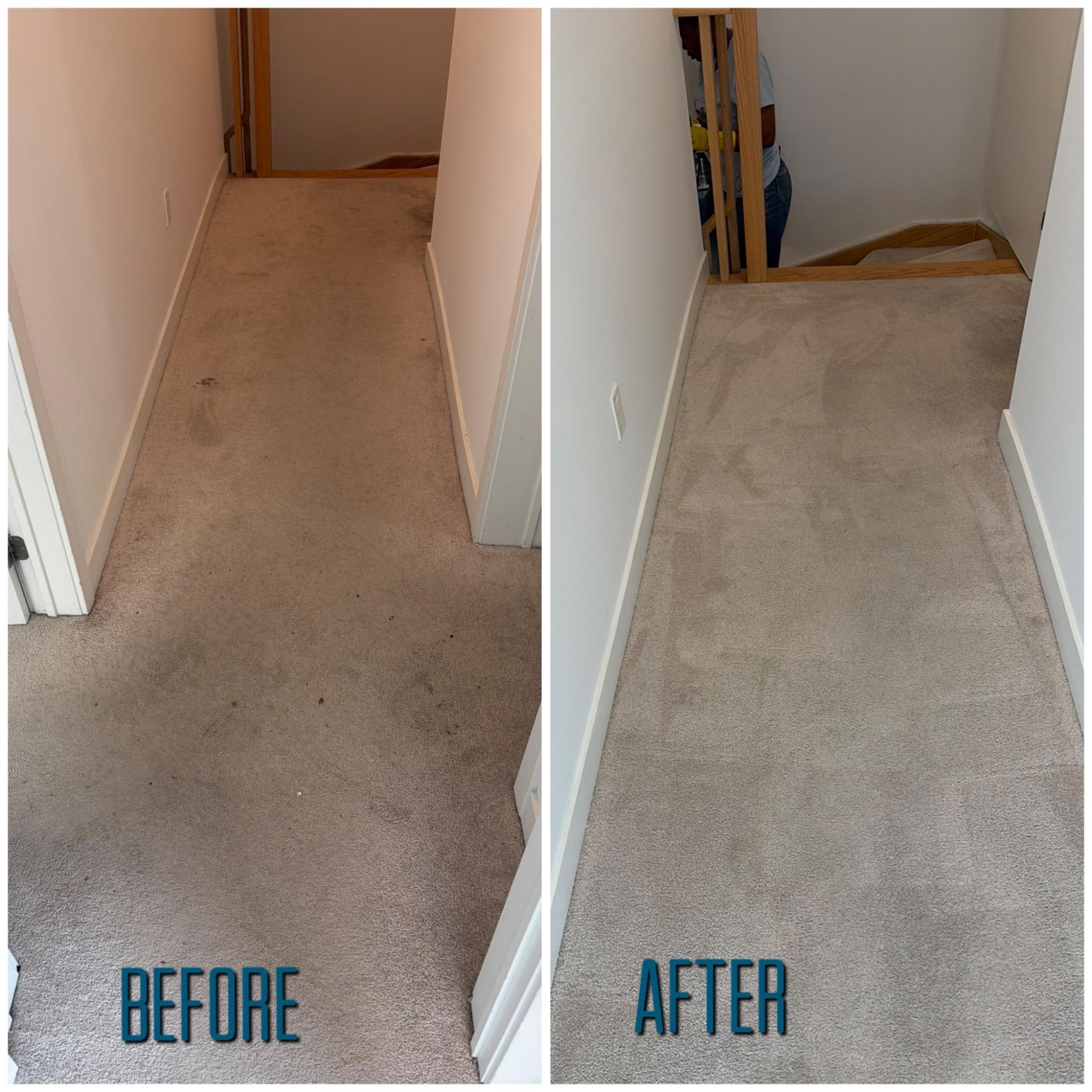
Leronzo Cleaning | Real carpet before and after extraction. Visible improvement does not by itself prove that deeper underpad or subfloor contamination is gone.
That distinction matters. A trustworthy company should use photos to show process and visible results, while explaining separately what was assessed, treated, and verified.
Frequently asked questions
Can old pet urine be removed from carpet?
Often it can be substantially improved or eliminated, but age increases the chance of permanent colour change and deeper penetration. The Carpet and Rug Institute states that some urine stains may not be removable, so inspection should come before a guarantee.
Is cat urine harder to remove than dog urine?
Cat urine is often noticed for a stronger persistent odour, but the outcome still depends on volume, age, health and diet of the pet, repetition, carpet construction, and depth. Species alone does not predict the result.
Will regular carpet cleaning remove the urine smell?
It may help a small, fresh, surface-level accident. If residue has reached the backing or cushion, ordinary cleaning may improve the surface without reaching the source. In that situation, choose pet stain and odour removal or Deep Cleaning rather than General Cleaning.
Why can the smell seem stronger immediately after cleaning?
Moisture can temporarily make residual odour more noticeable. The meaningful check is after controlled drying. If the smell remains or returns after the carpet is dry, a deeper or wider source may still need treatment.
Does a UV light prove that urine is still in the carpet?
No. UV screening can help map possible residues, but IICRC consumer guidance notes that treated areas may continue to fluoresce. A UV response is one inspection clue, not proof by itself that cleaning failed.
Do I need to replace the carpet padding?
Not automatically. Replacement becomes more likely when repeated or extensive contamination has saturated the cushion and cannot be adequately treated and extracted. The carpet should be assessed before that decision is made.
Are the treatments safe for children and pets?
The method and product must match the material and be used according to label directions. Leronzo states that its pet-odour service uses pet- and child-safe solutions and that treated areas are safe to re-enter once dry. Keep people and pets away during treatment and follow the technician’s drying instructions.
How long will the carpet take to dry?
Leronzo lists four to six hours as a typical range under normal conditions for carpet cleaning, but localized deep treatment, weather, airflow, pile density, and cushion moisture can extend that time. Do not judge odour or replace furniture until the area is fully dry.
How much does pet urine treatment cost in Toronto?
There is no responsible one-price answer before the area and depth are known. Leronzo’s published General baseline starts at CAD $39 for a small room up to 90 sq ft, CAD $0.39 per actual carpeted sq ft, with a CAD $149 minimum service. Pet urine and strong odour require the Deep condition and a scope based on affected zones. Use the live calculator for the current booking price.
Is treatment different for an area rug?
Yes. Fibre, dyes, backing, construction, and whether the rug can be safely moved or washed can change the method. For a rug-specific overview, read Best Ways to Eliminate Pet Odors and Stains from Rugs.
Can pet urine permanently damage carpet?
Yes. Urine can alter dyes, create colour loss, or contribute to fibre and backing damage. Cleaning can remove contamination without reversing permanent material damage; that is the difference between cleaning and restoration.
What if the contamination is extreme or considered a biohazard?
Certified biohazard remediation and extreme biological contamination are outside Leronzo’s standard carpet-cleaning scope. The right next step is a qualified remediation provider, not a stronger consumer carpet product.
Book pet urine and odour treatment in Toronto & the GTA
Start with an honest assessment, not the strongest promise. Leronzo Cleaning Group treats pet stains and odours in wall-to-wall carpet, area rugs, sofas and upholstered furniture, mattresses, pet beds, and related fabric surfaces across Toronto and the Greater Toronto Area.
See the treatment service: Pet Stain & Odour Removal Toronto
Calculate by carpeted area or room:
Check coverage: Toronto & GTA Service Areas
Call: +1 (437) 333 3062
WhatsApp: Message Leronzo
Sources and editorial references
The Carpet and Rug Institute — Pet Urine and Carpet technical bulletin
The Carpet and Rug Institute — Cleaning and Maintenance
IICRC — Consumer Floor and Furnishings Care Information
Iowa State University / MDPI — Cat urine odour mitigation study (2020)
Leronzo Cleaning Group — Pet Stain & Odour Removal Toronto
Leronzo Cleaning Group — Carpet Cleaning Toronto & GTA
Leronzo Cleaning Group — Toronto carpet price guide (August 9, 2026)
Leronzo Cleaning Group — Cleaning Cost Calculator
Mytee — 8070 Lite heated carpet extractor specifications
Esteam — E600 carpet extractor specifications
Esteam — ATTACK enzyme prespray specifications
Pet Urine Carpet Cleaning Areas We Serve
Leronzo Cleaning provides pet urine stain and odour treatment for carpeted rooms, stairs, and other affected areas in houses, condos, apartments, and rental properties throughout the region.
Select your location to view local cleaning information:
Downtown Toronto · North York · Scarborough · Etobicoke · Mississauga · Brampton · Markham · Richmond Hill · Oakville · Burlington · Ajax · Pickering · Whitby · Oshawa
Service recommendations depend on the carpet material, size of the affected area, age of the stain, and depth of contamination.