


Quick answer
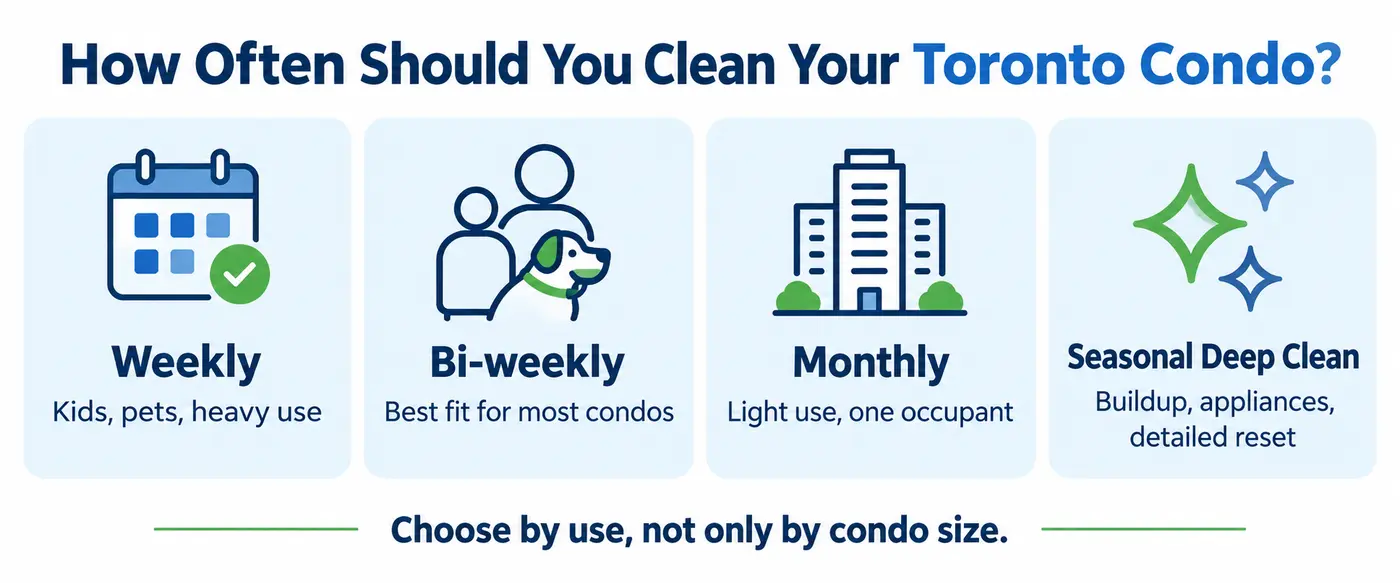
Most Toronto condos benefit from professional cleaning every two to four weeks. A weekly visit is usually better for homes with children, pets, frequent cooking or several occupants. A monthly visit can work for one or two adults who maintain the unit between appointments. The right frequency depends more on how the condo is used than on square footage alone.
| Cleaning frequency | Usually works best for | Main goal |
|---|---|---|
| Weekly | Busy households, pets, children, frequent cooking | Prevent visible buildup |
| Every two weeks | Most occupied condos with regular daily use | Keep kitchens, bathrooms and floors consistently maintained |
| Every four weeks | One or two adults who clean between visits | Handle the detailed work that is easy to postpone |
| One-time | Seasonal reset, guests, move, long cleaning gap | Restore the home before returning to maintenance |
Choose the schedule by how quickly the condo changes
A 600-square-foot condo with two people, a dog and daily cooking can need more frequent cleaning than a larger unit occupied by one person. Watch how quickly the kitchen, bathroom, floors and dust-prone surfaces change after a visit. If the home looks noticeably overdue several days before the next appointment, the interval is probably too long.
Weekly cleaning
Weekly service is useful when the home generates new mess faster than the household can comfortably manage it. Common examples include pet hair on floors, children using several rooms, regular entertaining, daily cooking and two frequently used bathrooms. Shorter intervals also mean that cleaners spend less time fighting older residue and more time maintaining a stable result.
Every two weeks
Bi-weekly cleaning is the practical starting point for many Toronto condo households. It is frequent enough to control bathroom residue, kitchen grease, dust and floor soil without paying for weekly service when the unit stays reasonably tidy. This option works best when residents handle dishes, spills, clutter and light vacuuming between visits.
Every four weeks
Monthly professional cleaning can suit a low-traffic condo occupied by one or two adults. It assumes the household manages routine tasks between visits. Waiting four weeks is less suitable when pet hair, cooking residue or bathroom scale becomes visible well before the appointment. A monthly booking should not be expected to function like unlimited deep cleaning.
One-time or seasonal cleaning
A one-time visit makes sense before guests, after a busy period or when a regular schedule is not needed. If several cleaning cycles have been missed, start with Deep Cleaning and then move to a recurring plan. Our guide to signs that a home needs deep cleaning can help separate accumulated buildup from routine maintenance.
Five factors that should change the frequency
- Occupancy: more residents normally mean faster bathroom, kitchen and floor buildup.
- Pets: hair, paw marks, litter tracking and odour sources often shorten the useful interval.
- Cooking: frequent stovetop use creates grease and airborne residue even in a small kitchen.
- Children and guests: more movement adds fingerprints, crumbs, spills and floor soil.
- Your own routine: professional visits can be less frequent when residents manage clutter, dishes, spills and light maintenance consistently.
A simple test: is your current interval working?
- The bathroom still looks maintained when the next visit is due.
- Kitchen grease and crumbs have not become established buildup.
- Floors need routine vacuuming or mopping, not repeated heavy passes.
- The priority list fits the booked cleaner-hours.
- You are not adding the same unfinished tasks at every appointment.
If two or more of these statements are regularly false, shorten the interval, increase the booked time or reset the unit with a more detailed first visit. If everything remains under control, extending the schedule may be reasonable.
What recurring condo cleaning should cover
A maintenance visit should prioritize the areas that affect daily comfort most: kitchen surfaces, sink and stovetop; bathroom fixtures, toilet and accessible shower surfaces; dusting of reachable areas; vacuuming; mopping; and waste removal. The exact result depends on the selected service, condition and cleaner-hours.
| Usually suited to recurring cleaning | May require another service or add-on |
|---|---|
| Accessible counters and exterior appliance surfaces | Inside oven, refrigerator or heavily neglected cabinets |
| Routine bathroom residue | Severe scale, damaged grout or mould remediation |
| Vacuuming and mopping | Carpet or upholstery extraction |
| Reachable dusting | Post-renovation fine dust |
| General tidying within the booked time | Move-in or move-out handover scope |
For fibre-level soil or odour, use Carpet Cleaning or Upholstery Cleaning. For an empty unit handover, review Move-In / Move-Out Cleaning. Matching the service to the problem prevents unrealistic expectations from a routine appointment.

How much time should you book?
Frequency and duration work together. A small condo does not automatically need a short appointment, and a larger unit does not always need deep cleaning. Condition, bathrooms, pets, clutter and requested extras matter. Leronzo’s recurring cleaning rate is CAD $49 per cleaner per hour with a three-hour minimum. Confirm the current scope and total on the Weekly, Bi-Weekly & Every 4 Weeks Cleaning page before booking.
If your priority list is longer than the available time, rank it before arrival. Start with bathrooms and kitchen, then floors and dusting. The article What Can a Professional Cleaner Do in 3 Hours? explains why cleaner-hours and priorities matter more than a vague promise to clean everything.
Toronto condo logistics can reduce productive time
Condo cleaning involves more than unit size. Parking distance, elevator access, concierge procedures and restrictions on service entry can affect setup time. Before the appointment, register the cleaner if required, confirm visitor parking, provide the buzzer or access instructions and clear frequently used surfaces. These steps keep paid time focused on cleaning.
See the full Condo & Apartment Cleaning service for available options. Leronzo serves Toronto and the GTA, including North York, Mississauga, Markham and Ajax.

How to start without overbooking
- Assess the current condition honestly: maintenance or accumulated buildup.
- Choose the three areas that matter most to you.
- Begin with a two-week interval if you are uncertain.
- After two or three visits, check whether the unit stays comfortable until the next appointment.
- Shorten or extend the interval based on actual condition, not a generic calendar rule.
Frequently asked questions
Is weekly condo cleaning excessive?
Not when the unit has high daily use, pets, children, frequent guests or regular cooking. Weekly service is excessive only if the home remains consistently maintained and the booked time has no meaningful priorities.
Is bi-weekly cleaning enough for most condos?
It is a sensible starting point for many occupied condos. Residents still need to manage dishes, spills, clutter and urgent messes between professional visits.
Can I book every four weeks?
Yes. Monthly service works best for lower-traffic units that receive light upkeep between appointments. If buildup repeatedly appears before the visit, shorten the interval.
Should the first visit be a deep clean?
Only when the current condition requires it. A maintained condo with light recent soil may be suitable for regular cleaning from the first appointment.
Does recurring cleaning include carpet extraction?
No. Vacuuming may be part of routine maintenance, while fibre-level washing and stain treatment require a carpet-cleaning service.
Can I change the frequency later?
Yes. Use the condition before each appointment as the guide. A schedule should adapt when occupancy, pets, work routines or household needs change.
Choose the interval your condo can maintain
Start with every two weeks if you are unsure. Move to weekly when the home becomes visibly overdue before the next visit, or extend to every four weeks when the unit remains controlled with light household upkeep. The best schedule is the one that prevents buildup without paying for unnecessary visits.