


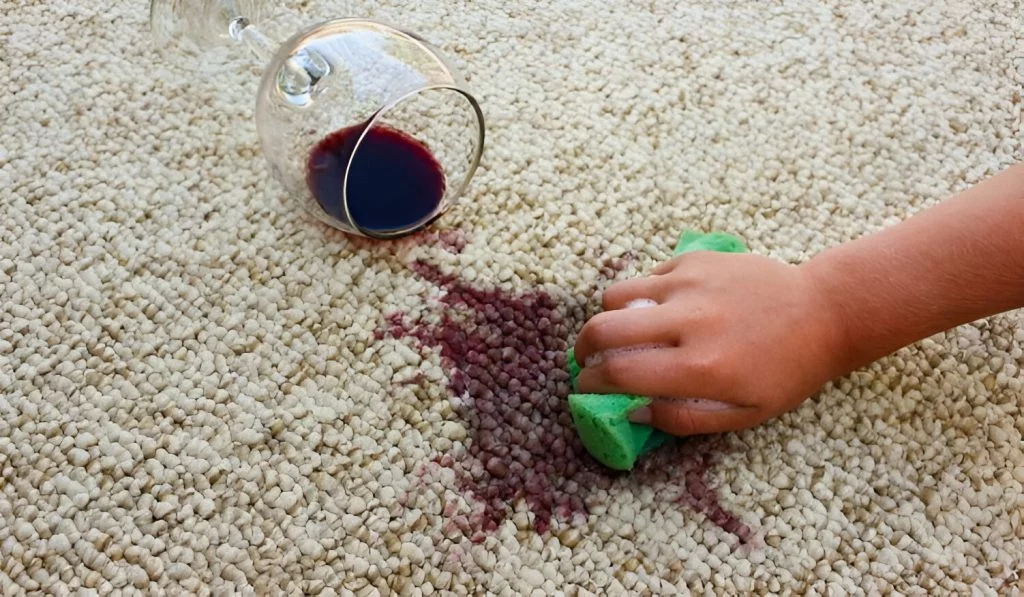
A practical guide to stain removal, permanent colour change, pet contamination, pricing and realistic results across Toronto and the GTA
| Direct answerSpilled coffee, tracked in winter salt, or found a pet spot that keeps returning? Many carpet marks can be removed or noticeably improved, especially when they are treated early with the right products. However, some marks are permanent changes rather than dirt: bleach, sun fading, burns and worn fibres cannot be reversed by cleaning. The likely result depends on the cause, age and depth of the mark, the carpet fibre and anything already applied at home. |
|---|
The fastest way to understand the result
The same dark patch can be removable soil, colour loss or physical wear. The first step is to identify which one it is before choosing a treatment or promising a result.
Leronzo Cleaning — A visible mark may be removable soil, a permanent colour change or physical fibre damage.
Quick answer: which carpet marks usually respond to professional cleaning?
| Mark or contamination | Typical outlook | Why results vary | What a professional checks |
|---|---|---|---|
| Fresh food and drink spills | Often removable or substantially improved | Fibre type, colour, temperature and response time | Colourfastness, residue and spill depth |
| Oil, grease and tracked-in soil | Often removable with the correct chemistry | Older oils can bind to synthetic fibres | Soil type, traffic wear and prior products |
| Pet urine and odour | Variable; surface contamination often improves | Repeated accidents can reach the backing, underpad or subfloor | UV pattern, odour source, affected area and moisture depth |
| Blood and other protein spots | Variable; earlier treatment is better | Heat and incorrect chemistry can set protein residue | Age, previous treatment and fibre compatibility |
| Coffee, wine, juice and dye transfer | Variable | Strong dyes, heat and time can alter the fibre colour | Dye stability and whether colour loss has occurred |
| Ink, paint, adhesive or cosmetics | Variable to high risk | Solvents and pigments behave differently across fibres | Product type, backing risk and safe spotting limits |
| Bleach or chemical colour loss | Usually not removable by cleaning | The dye has been removed or altered | Whether colour repair or replacement is appropriate |
| Sun fading, burns, melting or wear | Not a cleaning-removable stain | The fibre or colour is physically changed | Repair, patching or replacement options |
A stain is not the same as colour loss or carpet damage
A removable stain is foreign material sitting on or within the carpet fibre. Professional cleaning works by loosening, suspending and extracting that material. Colour loss is different: bleach, acne medication, strong household products and sunlight can alter the original dye. Wear is different again and includes flattened traffic lanes, burns, melted fibres and tears.
This matters because a cleaner carpet is not the same as a repaired carpet. Cleaning can remove soil and improve many marks, but it cannot rebuild missing fibre or put removed dye back into the carpet. When the change is permanent, colour repair, patching or replacement may be the honest next step.
Before you reach for a household cleaner
A bleach mark is colour loss, not dirt. Scrubbing it or adding more household chemicals will not restore the dye and may make the damage harder to assess. Blot fresh spills, avoid heat and tell the technician exactly what was used.
What determines whether a stain can be removed?
Carpet fibre and construction. Nylon, polyester, olefin, wool and blended carpets respond differently to water, solvents, oxidizers and reducers.
Time. Fresh contamination is usually easier to treat. As a spill dries and gets walked on, residue can settle deeper and become harder to remove.
Heat and prior DIY products. Hot water, steam irons, bleach, dish soap and mixed household chemicals may set a mark, remove colour or leave sticky residue.
Depth. A surface spot is different from liquid that has entered the backing, underpad or subfloor.
Colourfastness. A treatment must be strong enough to address the contaminant without destabilizing the carpet dye.
Physical wear. A traffic lane may remain darker or lighter because the fibre has been abraded or flattened, even after soil is removed.
Toronto carpet problems we see often
Winter salt and slush can leave white or grey residue in entryways and traffic lanes. These marks often improve with a professional rinse, but the result depends on how long the residue has been present, what was applied at home and whether the fibre is worn.
In Toronto condos, the cleaning plan may also depend on parking, elevator access and building service-hour rules. Portable professional equipment can be used in many high-rise buildings, with moisture managed for the carpet and site conditions.
For a move-out or property inspection, treat stains early and leave enough drying time. Cleaning can improve the carpet’s condition, but no company should promise a specific inspection result or deposit outcome.
What a professional stain-removal visit should include
1. Inspect and identify — Review the carpet fibre, backing, stain pattern, odour source, previous products and access conditions.
2. Test before treating — Check colourfastness and select a product appropriate for both the contaminant and the carpet.
3. Remove dry soil — Vacuuming or pile preparation removes loose particulate matter before moisture is introduced.
4. Pre-treat and allow dwell time — Apply targeted chemistry, give it time to work and agitate only when the fibre and construction allow it.
5. Extract and rinse in a controlled way — Recover suspended soil and residue while managing moisture and avoiding unnecessary over-wetting.
6. Repeat only when safe and useful — A second treatment or pass can improve the result, but more chemistry is not always better.
7. Dry and reassess — Air movement and ventilation reduce drying time; final appearance should be judged after the carpet is fully dry.
Pre-cleaning inspection: visible soil and several different marks
The photographs below show why a room should be assessed as a pattern, not as one generic “stain.” The hallway contains a broad traffic lane, scattered spots and darker areas near doorways. The landing by the stairs shows overlapping marks with different shapes and likely causes. Each area may need a different treatment, and some remaining contrast may come from wear rather than removable soil.
 |  |
|---|---|
| Leronzo Cleaning — Pre-cleaning hallway inspection. | Leronzo Cleaning — Pre-cleaning landing and stair area. |
Real Toronto-area case: repeated pet accidents in a basement room
| Case summaryRoom size: approximately 108 sq. ft. | Service: deep carpet cleaning with urine-specific treatment | Treatment time: about 2.5 hours | Price: CAD $149 | Situation: repeated pet accidents and a strong odour in a basement room used by an elderly dog. |
|---|
The customer reported a sharp odour and repeated urine and fecal accidents. Because the contamination was not a single fresh spot, the work was approached as a pet-contamination treatment rather than an ordinary maintenance clean. The technician inspected the room, treated the affected carpet with a urine-specific odour product twice and completed approximately three controlled extraction/rinse passes.
 |  |
|---|---|
| Leronzo Cleaning — Urine-specific pre-treatment before controlled extraction. | Leronzo Cleaning — Before-and-after result from the 108 sq. ft. basement room. |
After treatment, the carpet looked substantially cleaner and fresher, the strong odour was no longer noticeable after the service, and the visible spots were removed or substantially improved. The customer was satisfied. This is a real job result, not a guarantee for every carpet: the outcome depends on fibre type, age, previous products and how deeply the contamination has travelled.
Why pet urine odour can return after the surface looks clean
The spot you can see may be smaller than the affected area underneath. Like liquid spreading through a paper towel, urine can move sideways through the carpet backing and collect in the underpad. After repeated accidents, it may reach the subfloor. Surface spotting can improve the visible mark while leaving the odour source below.
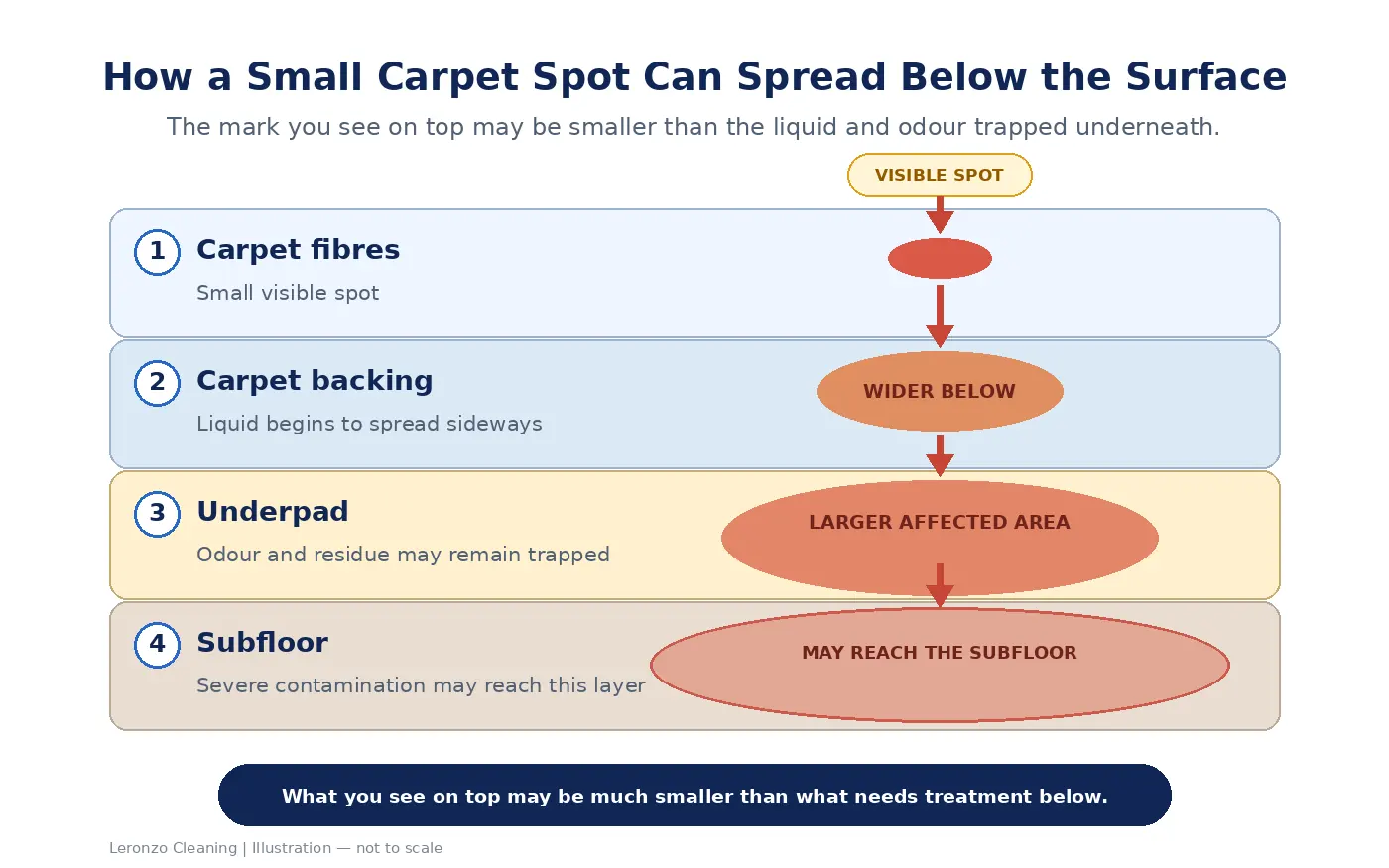
Leronzo Cleaning — Repeated pet accidents can affect layers below the visible carpet surface.
The Carpet and Rug Institute also notes that urine can affect dyes and create persistent odour issues. For repeated contamination, an honest assessment may recommend more extensive treatment, underpad replacement or subfloor work instead of promising that surface cleaning alone will solve the problem.
Toronto carpet-cleaning prices: what the numbers mean
Leronzo carpet-cleaning prices currently start at CAD $39 for a small room up to 90 sq. ft., with a minimum service of CAD $149. The final total depends on room size, stairs, the number and type of stains, contamination depth, required treatment, access and any selected add-ons. The real pet-contamination case above was approximately 108 sq. ft., took about 2.5 hours and cost CAD $149.
For current room categories and pricing, use the Toronto carpet-cleaning cost guide. For an exact booking total, select the rooms, stairs and treatment needs in the online booking calculator linked at the end of this guide.
General vs. Deep carpet cleaning by space
General carpet cleaning is intended for maintained carpets with everyday soil and light spots. Deep carpet cleaning is priced higher because heavier buildup, repeated accidents or odour sources may require additional pre-treatment, agitation and extraction passes. Prices below are per selected carpeted space; the minimum service booking is CAD $149.
| Space | Size | General (CAD) | Deep (CAD) |
| Room — Small | Up to 90 sq. ft. | $39.00 | $51.00 |
| Room — Medium | 91–140 sq. ft. | $49.40 | $64.60 |
| Room — Large | 141–200 sq. ft. | $59.80 | $78.20 |
| Room — X-Large | 201–350 sq. ft. | $91.00 | $119.00 |
| Hallway — Small | Up to 40 sq. ft. | $26.00 | $34.00 |
| Hallway — Medium | 41–80 sq. ft. | $39.00 | $51.00 |
| Hallway / Foyer — Large | 81–120 sq. ft. | $52.00 | $68.00 |
| Living Room — Small | Up to 90 sq. ft. | $48.10 | $62.90 |
| Living Room — Medium | 91–140 sq. ft. | $58.50 | $76.50 |
| Living Room — Large | 141–200 sq. ft. | $78.00 | $102.00 |
| Living Room — X-Large | 200–350 sq. ft. | $100.10 | $130.90 |
For example, one small room is CAD $39 for General treatment or CAD $51 for Deep treatment; a medium living room is CAD $58.50 or CAD $76.50. The final total depends on the selected spaces, stairs, stain type, contamination depth, access and treatment needs.
What to do before the technician arrives
- Blot a fresh spill with a clean white towel; do not rub it deeper into the pile.
- Do not use bleach or mix household chemicals. The combination can damage colour, create residue or create a safety risk.
- Avoid soaking the carpet. Excess moisture can spread contamination into the backing and underpad.
- Keep the product label or tell the technician exactly what was already applied.
- Photograph the original mark and note what caused it, when it happened and whether odour returns during humid weather.
- Move small breakables and provide access to the affected area; discuss heavy furniture before the appointment.
When replacement or repair may be the better answer
Professional cleaning is designed to remove soil, residue and treat many stains. It is not structural restoration. A patch, colour repair, underpad replacement or full replacement may be more appropriate when there is bleach damage, burns, melted fibres, delamination, severe wear, repeated contamination below the carpet, active water damage, suspected mould or a damaged subfloor.
A reputable cleaner should explain that limit before charging for repeated stain-removal attempts that are unlikely to change the result.
Frequently asked questions
Can every carpet stain be removed professionally?
No. Many spots and stains can be removed or substantially improved, but permanent colour loss, fibre damage, burns, sun fading and some chemically set dyes cannot be reversed by cleaning.
Can bleach stains be removed?
Cleaning cannot replace carpet dye removed by bleach. Depending on fibre and colour, a specialist may discuss colour repair, patching or replacement.
Can pet urine be completely removed from carpet?
Fresh, surface-level contamination often responds well. Repeated accidents are more complex because urine may reach the backing, underpad or subfloor. The treatment plan should match the depth of contamination.
Does an old stain automatically mean it is permanent?
No, but results become less predictable with time. Heat, repeated foot traffic and previous DIY products can set residue deeper or permanently change the colour.
How long does professional stain removal take?
A small spot may add limited time, while a contaminated room can require repeated treatment, extraction and drying. The Toronto-area pet case in this guide took about 2.5 hours for approximately 108 sq. ft.
How much does carpet stain removal cost in Toronto?
Pricing starts at CAD $39 for a small room up to 90 sq. ft., and the minimum service is CAD $149. The final price depends on room size, stairs, stain type, affected area and required treatment.
Should I clean a stain myself first?
Blotting a fresh spill is useful. Strong chemicals, bleach, aggressive scrubbing and over-wetting can make professional treatment harder, so stop if the fibre colour changes or the spot spreads.
Carpet cleaning across Toronto and the GTA
Leronzo provides residential carpet cleaning for houses, condos, apartments, stairs and selected rooms across Toronto and the GTA, including Ajax, Pickering, Mississauga and nearby service areas. High-rise residents can review the separate Toronto condo carpet-cleaning guide. For repeated accidents or odour concerns, see the pet urine removal service and the detailed Toronto homeowner’s guide to pet urine in carpet.
| Not sure whether the mark is removable?Do not scrub it or mix cleaning products. Take one wide photo, one close-up and note what caused the mark, when it happened and what has already been applied. Then choose the affected room or stairs online to see current pricing and book the right treatment. If the mark looks like colour loss or fibre damage, we will explain that before unnecessary treatment. |
|---|
Professional references
The treatment principles in this guide are consistent with the IICRC S100 Standard for Professional Cleaning of Textile Floor Coverings and the Carpet and Rug Institute technical bulletin on pet urine and carpet. Product selection, testing and procedures must still be adapted to the specific carpet and contamination found on site.