



Quick answer
Start dry: let the area dry, loosen the crust gently and vacuum thoroughly. Then test: use a small amount of clean water or a carpet-safe product in a hidden area. Stop if the mark spreads, colour changes or the carpet stays unusually wet. White winter residue can return when dissolved material remains below the visible fibres, so repeated surface wiping may not solve the problem.
Toronto winters bring snow, slush and de-icing material through entrances, condo corridors, stair landings and vehicle mats. Once the moisture dries, a pale line or hard white edge may remain on the carpet. The mark may be simple surface residue, but it can also include tracked soil, detergent from an earlier attempt or contamination that has moved deeper into the carpet.
Fresh surface residue
Usually feels dry or slightly crusty and may improve after careful vacuuming and controlled rinsing.
Recurring white ring
May indicate remaining residue or moisture moving material back toward the surface as the carpet dries.
Colour or fibre change
A pale area that does not respond may be dye loss, wear or fibre distortion rather than removable soil.
Why winter salt marks come back
The visible white patch is often only the top of the problem. Meltwater carries fine particles into the pile. If the area is saturated during cleaning, dissolved residue can move into the backing. As the carpet dries, moisture travels upward and may leave another pale edge at the surface. This is commonly described as spot reappearance or wicking.
- Too little removal: wiping changes the appearance but leaves material in the fibres.
- Too much water: flooding moves contamination deeper and increases drying time.
- Too much detergent: cleaner that is not fully removed can leave its own residue and attract soil.
- Fast surface drying: the top looks dry while deeper layers still contain moisture.
Is it salt, soil or permanent damage?
| What you see | Possible explanation | Practical next step |
|---|---|---|
| Dry white crystals or a crust | Surface de-icing residue | Dry, loosen gently and vacuum before adding moisture |
| Grey-brown traffic lane | Salt mixed with outdoor soil | Controlled cleaning across the full traffic area, not only one dot |
| White ring that returns after drying | Residue or contamination below the surface | Stop repeated soaking and consider extraction |
| Pale patch with unchanged texture | Possible colour loss | Get an assessment before applying another product |
| Flattened or rough fibres | Wear, abrasion or chemical damage | Cleaning may improve soil but cannot rebuild damaged fibres |
For a broader explanation of removable staining versus permanent change, read What Carpet Stains Can and Cannot Be Removed Professionally in Toronto?
A careful DIY method for a small salt mark
This method is suitable only for a limited area on carpet that is approved for wet cleaning. Follow the carpet manufacturer’s care instructions first. The Carpet and Rug Institute Spot Solver is also a useful starting point for product and stain-care guidance.
- Let the area dry. Do not grind wet slush deeper into the pile.
- Remove dry material. Loosen the crust gently with a spoon edge or soft brush, then vacuum slowly in more than one direction.
- Test first. Apply a small amount of clean water or a carpet-approved product to a hidden area and blot with a white cloth.
- Work from the outside inward. Use minimal moisture and blot rather than scrub.
- Remove what you dissolved. Transfer moisture and residue into clean white towels. Do not leave the carpet saturated.
- Dry and reassess. Keep air moving, restrict foot traffic and inspect only after the area is fully dry.
Stop and reassess if
- Colour transfers to the towel.
- The fibres become rough, sticky or distorted.
- The mark spreads beyond the original boundary.
- The same white ring returns after drying.
- The backing or floor below may have become wet.
What not to do
Do not keep adding detergent
More product does not guarantee more removal. It can create foam, leave residue and make later rinsing more difficult.
Do not mix household chemicals
Unknown combinations can affect carpet dyes, backing and indoor air. Use one tested carpet-safe method at a time.
Do not scrub aggressively
Hard rubbing can spread the mark, untwist fibres and create a worn-looking patch even after the residue is gone.
Do not judge while wet
Wet carpet reflects light differently. Wait until it dries before deciding whether another treatment is needed.
Before and after controlled carpet extraction
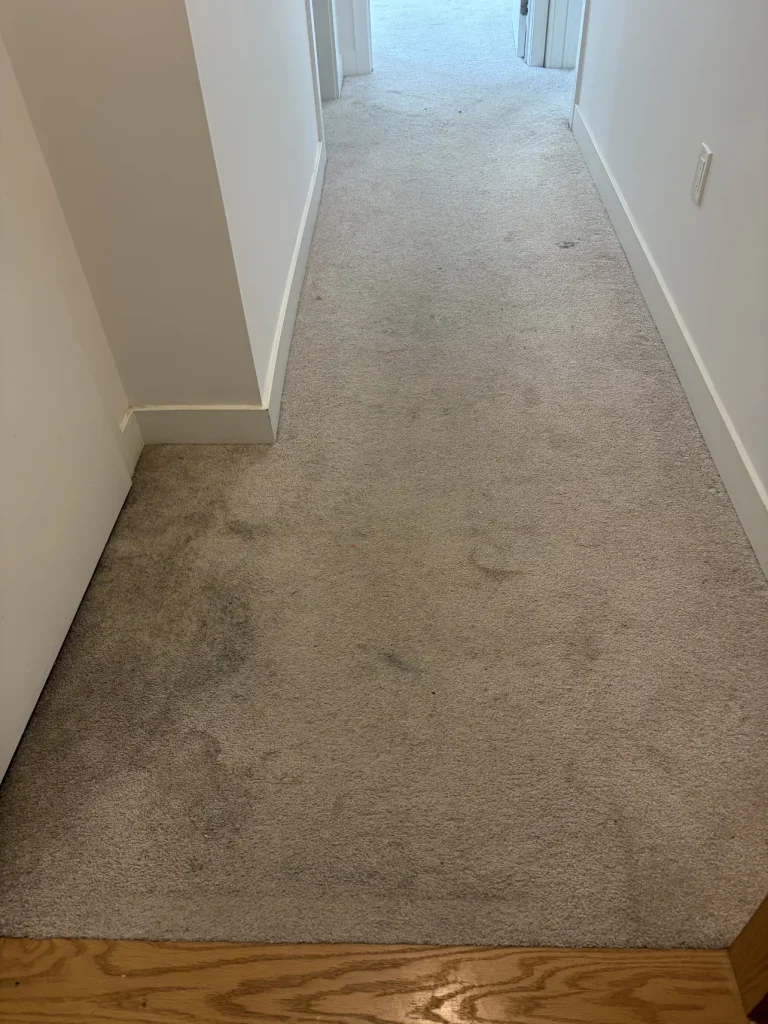
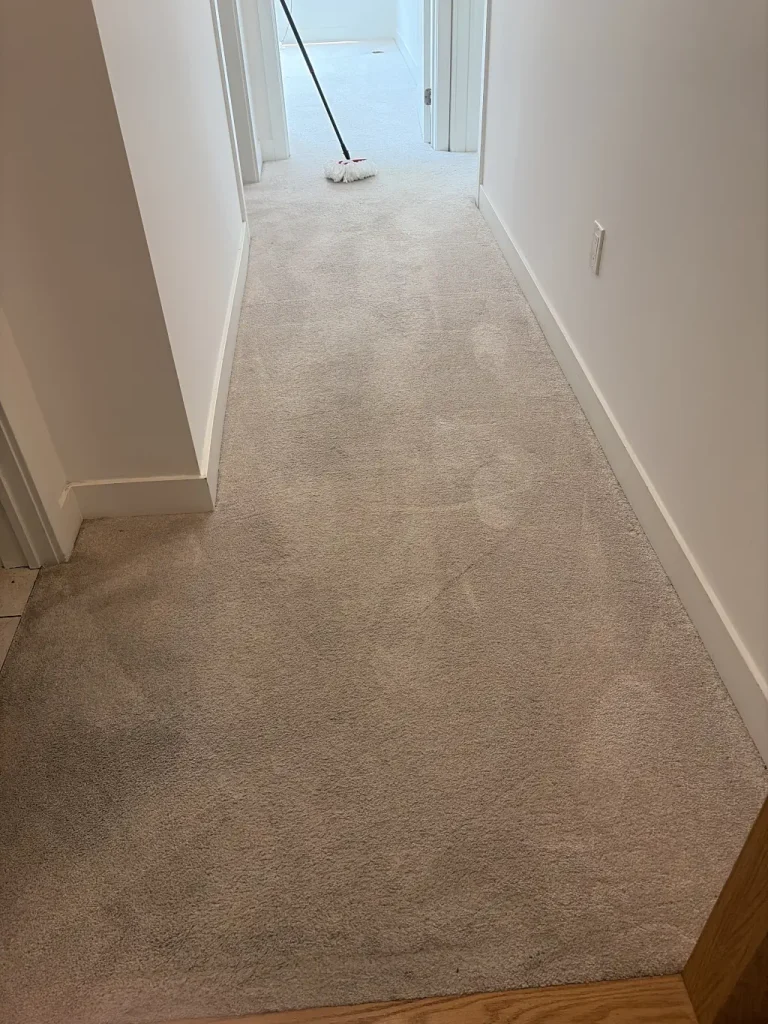
The photos show general soil removal rather than a guaranteed result for every salt mark. Fibre condition, previous products and the depth of contamination all affect the outcome.
When DIY is reasonable—and when professional cleaning is safer
| Situation | Reasonable starting point | Why |
|---|---|---|
| Fresh, small mark on known synthetic carpet | Careful dry removal and spot treatment | The area is limited and the fibre is known |
| Several entrance or hallway marks | Professional cleaning | Even cleaning across the traffic lane reduces patchy results |
| White ring returns after drying | Professional extraction assessment | Residue may remain below the visible fibres |
| Wool, viscose or unknown fibre | Test and professional assessment | Moisture, agitation and chemistry require more control |
| Condo common-area tracking | Coordinate access and clean the full affected route | Elevator, corridor and entry soil may be connected |
| Move-out or property inspection | Professional cleaning | A consistent finished appearance matters more than treating one isolated mark |
If you are deciding between rented equipment and a service visit, compare the full process in Rental Carpet Cleaner vs Professional Cleaning.
Toronto condo and high-rise considerations
In a condo, salt often appears near the suite entrance but may have been carried from the garage, lobby or elevator. Before cleaning, confirm whether the affected carpet belongs to the unit or the condominium corporation. For an in-suite appointment, arrange parking and elevator access if equipment must move through common areas. Keep the route clear and tell the cleaner about building rules, water access and any previous products used on the stain.
Portable extraction equipment can be practical where truck-mounted access is not available. The important point is controlled rinsing and moisture removal—not simply using the largest machine.
How to prevent winter salt buildup
- Use an outdoor scraper mat and a separate absorbent indoor mat.
- Leave wet footwear on a waterproof tray rather than directly on carpet.
- Vacuum entrance paths regularly after tracked material has dried.
- Blot fresh meltwater promptly without spreading it into a larger area.
- Rotate or clean mats before they become a source of residue themselves.
- Address recurring marks before repeated wet treatments build up more residue.
Current professional carpet-cleaning prices
Leronzo rooms start at $39, with a $149 minimum service. Current fixed-price packages range from $149–$269 for condos, $229–$359 for townhouses and $249–$419 for houses. Package selection depends on property type and carpeted bedrooms; basements and additional areas are separate.
Carpet cleaning across Toronto and the GTA
Professional carpet cleaning is available across Toronto and the GTA, including North York, Mississauga, Ajax and Oshawa. Review the full process, package inclusions and current pricing on the Carpet Cleaning service page.
Frequently asked questions
Why does the white salt mark return after the carpet dries?
Moisture may carry dissolved residue back toward the surface during drying. Repeated surface wiping can improve the mark temporarily without removing what remains deeper in the pile or backing.
Can I use vinegar on a salt stain?
Do not assume a homemade mixture is safe for every carpet. Check the manufacturer’s instructions, test in a hidden area and avoid combining products. Unknown fibres or previous treatments justify professional assessment.
Should I vacuum the salt before wet cleaning?
Yes, when the area is completely dry. Removing loose material first reduces the amount that can dissolve and travel deeper once moisture is added.
Can aggressive scrubbing remove the white crust faster?
It may spread residue and damage the appearance of the pile. Loosen dry material gently, vacuum and use controlled blotting rather than hard rubbing.
How long should the carpet take to dry?
Drying time varies with fibre density, moisture level, ventilation, temperature and humidity. Keep air moving and avoid normal foot traffic until the carpet is dry.
Will professional cleaning remove every salt stain?
No responsible cleaner can guarantee every mark. Residue and soil may be removable, while dye loss, wear or previous chemical damage can remain.
When should I stop DIY treatment?
Stop if colour transfers, fibres change texture, the mark spreads, the same ring repeatedly returns or the carpet becomes wetter than you can remove safely.
Remove the residue—not just the white line
A small fresh mark may respond to careful dry removal and limited spot treatment. A recurring ring, large traffic area or unknown carpet needs a more controlled plan. Start with the least aggressive safe method, remove dissolved material rather than spreading it, and judge the result only after complete drying.